












www.farmgolds.com

Categories

    Dark Souls 2 Boss Design, Elden Ring Nightreign PvP Mechanics, Looking Glass Knight Legacy

    Tags: Dark Souls 2 Boss Mechanics, Looking Glass Knight PvP Design, FromSoftware Multiplayer Innovation,

    Share To Your:

    As Elden Ring Nightreign approaches, FromSoftware’s ambitious fusion of Soulsborne enemy rosters has sparked intense speculation within the gaming community. By integrating iconic adversaries from Dark Souls 1, 2, 3, and Elden Ring into a roguelike framework, the project demands meticulous curation of boss mechanics. While fan-favorite encounters like Artorias and Fume Knight dominate discussions, one groundbreaking Dark Souls 2 innovation risks being overlooked: the Looking Glass Knight’s dynamic PvP integration. This boss archetype represents a critical evolution in FromSoftware’s design philosophy—a legacy too impactful to abandon.


    The Looking Glass Knight: A Masterclass in Adaptive Combat

    QQ_1744200625791.png

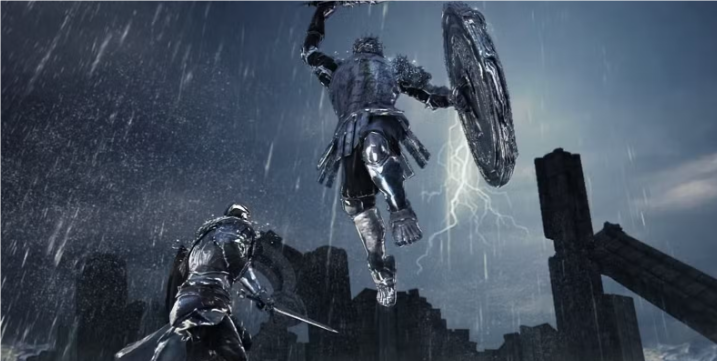
    Emerging from Dark Souls 2’s storm-lashed Drangleic Castle, the Looking Glass Knight redefined player expectations through its multi-layered design. Clad in reflective silver armor and wielding lightning-infused strikes, this boss initially appears as another formidable melee opponent. However, its true genius unfolds mid-battle: the Knight summons live players or NPC phantoms as reinforcements, transforming a structured duel into unpredictable chaos.

    This mechanic achieved three pivotal outcomes:

    1. Narrative Synergy: The thunderstorm backdrop visually amplified the Knight’s lightning attacks while symbolizing the volatility of its summoning ability.

    2. Mechanical Innovation: By blending PvE and PvP elements, it created emergent storytelling unique to each player’s session.

    3. Community Engagement: Invaders temporarily became narrative agents, deepening immersion through asymmetric warfare.

    Unlike later attempts like Dark Souls 3’s Halflight—which prioritized structured PvP—the Looking Glass Knight’s unpredictable summons mirrored the organic tension of spontaneous invasions.


    Historical Precedents: From Demon’s Souls to the Shadows of Erdtree

    QQ_1744200669803.png

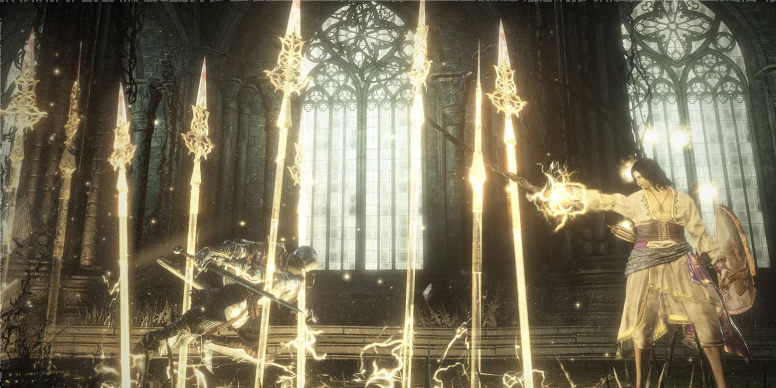
    FromSoftware’s experimentation with player-integrated bosses traces back to Demon’s Souls’ Old Monk, where invaders could assume the boss role—a concept refined in Dark Souls 2 and 3. However, recent titles like Elden Ring have deprioritized this design despite its proven success. Nightreign’s focus on co-op PvE presents an ideal opportunity to reintroduce these mechanics with modern enhancements:

    • Procedural Summoning: Randomize phantom appearances based on player behavior or in-game milestones.

    • Reward Systems: Grant unique items to players who successfully defend their role as "boss allies."

    • Lore Integration: Frame invaders as mercenaries hired by Nightreign’s faction leaders, aligning with the expansion’s rumored war narrative.


    Why Nightreign Needs the Looking Glass Knight’s DNA

    While Elden Ring’s invasion system favors voluntary opt-ins, Nightreign could leverage mandatory PvP segments to amplify tension. Imagine encountering a demigod commander who summons rival Tarnished mid-fight, their builds syncing with the boss’s elemental affinities. Such encounters would:

    • Revitalize the community’s interest in niche builds optimized for boss support roles.

    • Create viral moments as players share clips of unexpected invasion outcomes.

    • Honor FromSoftware’s tradition of subverting genre conventions.

    Critically, this system requires no narrative justification. Soulsborne lore already frames parallel worlds and dimensional rifts as foundational concepts, making phantom summons a natural extension of existing metaphysics.


    Preserving a Dying Art in Modern Soulslikes

    The Looking Glass Knight’s absence since Dark Souls 3 reflects broader industry trends favoring predictable PvE experiences over disruptive multiplayer integrations. Yet, its legacy persists in modded content and community challenges, proving enduring appeal. Nightreign’s roguelike structure is uniquely positioned to resurrect this mechanic through:

    • Adaptive Difficulty: Scaling phantom frequency based on player skill metrics.

    • Temporary Boss Roles: Letting players "equip" Looking Glass Knight-style abilities during co-op.

    • Dynamic Weather Systems: Reintroducing environmental modifiers that enhance PvP synergies.

    By embracing controlled chaos, FromSoftware can honor Dark Souls 2’s boldest experiment while pushing the genre forward.


    For the cheapest Dark Souls 2 Souls, visit Farmgolds—we offer fast delivery, secure transactions, and 24/7 customer support.


    Feb-09-2025


    Game News
    • Where To Find All Estus Shards in Dark Souls 3
      Where To Find All Estus Shard…
      Heres where to find all Estus Shards in Dark Souls 3, which are needed to fully upgrade the Estus Flask. The Estus Flask is a vital healing item and can only be upgraded with Estus Shards . By finding …

      2025-08-27 PST

    • Dark Souls 3: Top 10 Mistakes New Players Should Avoid
      Dark Souls 3: Top 10 Mistakes…
      OverviewEmbarking on your first journey through Dark Souls 3? This guide highlights ten common pitfalls that new players often encounter. By understanding and avoiding these mistakes, you can enhance …

      2025-08-26 PST

    • A list of Illusory Wall locations in Dark Souls 3
      A list of Illusory Wall locat…
      Illusory walls are fake walls that disappear when hit with a weapon, revealing new passageways, secret areas, and sometimes even access to secret bossesIllusory Wall LocationsFirelink Shrine One is loc…

      2025-08-25 PST

    • Dark Souls: Remastered: 10 Rarest Rings ( Where To Find Them)
      Dark Souls: Remastered: 10 Ra…
      OverviewRings in Dark Souls: Remastered offer beneficial effects and stat boosts, but some are harder to find than others. This guide details 10 of the rarest rings in the game and where to find them, …

      2025-08-19 PST

    Live Chat